

Healthspan vs. Lifespan: Why Living Longer Isn’t the Same as Living Well

The Longevity Illusion
Imagine two people who both live to 90. On paper, their stories look identical. Same number of birthdays. Same decades crossed. Same final number.
But look closer.
One spends the final twenty years gradually shrinking, first giving up tennis, then long walks, then travel, then driving, and eventually even the stairs in their own home. Their world slowly contracts.
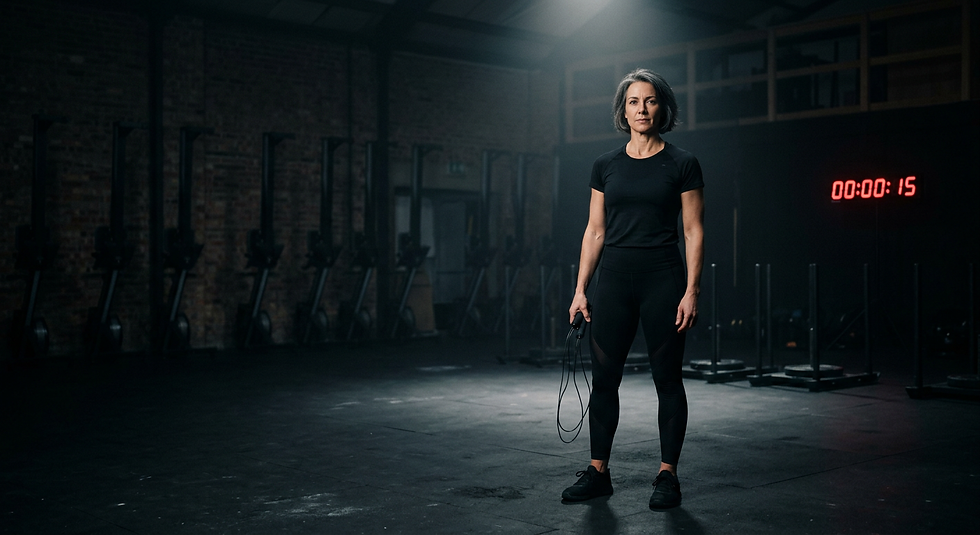
The other is still lifting groceries, traveling, playing with grandchildren, and moving through daily life with strength and confidence.
Same lifespan.
Completely different lives. Modern culture is obsessed with lifespan, how many years we can add to the clock. But the more meaningful question isn’t how long you live. It’s how well you live during the years you’re given.
That’s where a different concept comes in: Healthspan.
Healthspan is the portion of your life where your body still works the way it was designed to, where you remain strong, capable, independent, and able to move through the world without constant physical limitation.
In other words, the real goal of longevity isn’t simply adding candles to the cake.
It’s making sure you can still stand up to blow them out.
Lifespan vs. Healthspan: The Critical Distinction
Lifespan refers to the total number of years a person lives. Healthspan refers to the number of years a person lives without significant disease, disability, or loss of function.
The difference between the two can be enormous.
Research from the World Health Organization and the Global Burden of Disease Study suggests that many adults in developed countries now spend 8–12 years of life in poor health or with significant functional limitations (WHO, World Health Statistics, 2022).
In other words, modern medicine has become very good at keeping people alive.
But it has not always been as successful at keeping people capable.
Many chronic diseases that limit independence later in life, heart disease, type 2 diabetes, osteoporosis, and neurodegenerative disorders, develop silently over decades before symptoms become apparent. This hidden progression creates a gap between simply living longer and living well, highlighting why focusing on healthspan, the years spent strong, capable, and independent, is just as important as extending lifespan.
Which means the real work of extending healthspan doesn’t begin at 70. It begins at 40. Sometimes earlier.
The Quiet Decline Most People Never Notice
The human body doesn’t usually fail dramatically. It declines quietly.
Muscle mass decreases gradually beginning around age 30 in a process called sarcopenia, with adults losing approximately 3–8% of muscle mass per decade if no resistance training is performed (Mitchell et al., Applied Physiology, Nutrition, and Metabolism, 2012).
Strength declines even faster. This matters far more than most people realize.
Muscle isn’t just about appearance or athletic performance. It’s a metabolic and protective organ.
Adequate muscle mass improves:
Blood sugar regulation
Bone density
Joint stability
Balance and fall resistance
Overall metabolic health
In fact, grip strength alone, one of the simplest measures of muscular function, has been shown to strongly predict all-cause mortality and cardiovascular disease risk (Leong et al., The Lancet, 2015).
That means the ability to hold onto something firmly may tell doctors more about your long-term health than many traditional lab markers.
Why?
Because muscle is deeply intertwined with the systems that keep the body resilient. Lose muscle, and you begin losing metabolic flexibility, stability, and physical autonomy. And most people lose it slowly without realizing what’s happening.
The Cultural Mismatch: Modern Life vs. Human Biology
Human physiology evolved in a world where movement wasn’t optional. For most of human history, daily life involved walking long distances, lifting objects, climbing, carrying, and performing manual labor.
Anthropologist Daniel Lieberman of Harvard University describes humans as “endurance-adapted movers”, biologically designed for frequent, varied physical activity (Lieberman, Exercised, 2021, p. 32).
Today, however, many adults spend 10–12 hours per day sitting. Technology has removed nearly all physical friction from daily life. Groceries arrive at the door. Elevators replace stairs. Cars replace walking.
From a convenience perspective, this is remarkable progress. From a biological perspective, it creates a problem. Your body still expects movement. When it doesn’t receive it, systems begin shutting down.
Metabolism slows. Muscle tissue decreases. Bone density declines. The cardiovascular system becomes less efficient. None of this happens overnight. But over decades, the effects accumulate.
And the result is what geriatric researchers sometimes call “the compression of capability.”
The body becomes older long before the calendar says it should.
The Role of Strength in Healthspan
If there is one physical quality that most consistently predicts healthspan, it is strength.
Not because strength itself is magical, but because the process of building strength triggers a cascade of beneficial adaptations throughout the body.
Resistance training improves:
Muscle mass
Bone density
Insulin sensitivity
Mitochondrial function
Hormonal balance
A major meta-analysis published in the British Journal of Sports Medicine found that adults who performed muscle strengthening activities at least twice per week had a 10–20% lower risk of all-cause mortality compared to those who performed none (Momma et al., BJSM, 2022).
Strength training also significantly reduces risk factors associated with cardiovascular disease and metabolic syndrome.
But perhaps more importantly, strength preserves something that rarely appears in medical charts:
Independence.
The ability to:
Carry luggage
Climb stairs
Rise from the floor
Prevent falls
Maintain mobility into later decades
These abilities determine whether later life feels expansive or restrictive. In many ways, strength training is less about building muscles for today. It’s about protecting capability for decades from now.
The Overlooked Role of Nutrition
Movement alone cannot build or maintain healthspan. Nutrition plays an equally important role. One of the most significant nutritional concerns for adults over 40 is insufficient protein intake.
Protein provides the amino acids required for muscle repair, immune function, enzyme production, and hormone synthesis.
Yet many adults consume far less than the amount needed to maintain muscle tissue as they age.
Research published in the American Journal of Clinical Nutrition suggests that older adults may benefit from 1.2–1.6 grams of protein per kilogram of body weight per day, significantly higher than the standard minimum recommendation (Phillips & Van Loon, AJCN, 2011).
This is particularly important because aging muscle becomes less sensitive to protein stimulation, a phenomenon known as anabolic resistance.
In practical terms, the body requires a stronger signal to maintain and build muscle tissue. Strength training and adequate protein intake provide that signal. Without it, muscle loss accelerates.
The Hidden Power of Movement Variety
Another key driver of healthspan is movement diversity. The human body was not designed for a single repetitive motion. Instead, it thrives on variety: walking, lifting, rotating, reaching, climbing. Biomechanically, this variety maintains:
Joint mobility
Tendon elasticity
Neuromuscular coordination
Balance and proprioception
Dr. Stuart McGill, a renowned spine biomechanics researcher from University of Waterloo, has repeatedly emphasized that the spine and joints stay healthy when exposed to appropriate, varied loading patterns (McGill, Low Back Disorders, 3rd ed., 2016, p. 47).
When movement becomes too repetitive, or disappears entirely, tissues adapt in ways that reduce resilience. In other words, joints become less prepared for the unexpected. And life is full of unexpected movements.
The Psychological Side of Longevity
Healthspan is not only physiological. It is also behavioral. The biggest obstacle to long-term health rarely comes from lack of knowledge.
It comes from inconsistency. Behavioral psychologists have long recognized that lasting change depends less on motivation and more on environment and structure.
Research from Stanford University shows that habit formation occurs most reliably when behaviors are anchored to existing routines and reinforced by social environments (Fogg, Tiny Habits, 2020).
In simple terms:
People rarely maintain health behaviors in isolation. Community, accountability, and structured environments dramatically increase adherence.
This is one reason coaching environments, training groups, and supportive communities often produce better long-term outcomes than solo fitness attempts.
Humans are social learners. We adopt the behaviors of the environments we inhabit.
The Myth of the “Late Start”
One of the most common misconceptions about healthspan is that it’s too late to start. The evidence says otherwise.
A landmark study published in JAMA Network Open found that adults who began exercising later in life still experienced significant reductions in cardiovascular disease risk and mortality compared to inactive peers (Lee et al., JAMA Network Open, 2019).
The body remains remarkably adaptable well into later decades. Muscle tissue can grow. Bone density can improve. Cardiovascular fitness can increase.
The human body retains its capacity for adaptation far longer than most people assume. What changes with age isn’t the ability to improve.
It’s the margin for neglect. The earlier healthy behaviors begin, the more powerful their long-term effect. But improvement is always possible.
A Different Way to Measure Success
In fitness culture, success is often measured through short-term metrics:
Weight lost.
Calories burned.
Steps counted.
But healthspan operates on a longer timeline. The real metrics are different.
Can you lift your own body weight from the floor?
Can you carry groceries without strain?
Can you walk long distances without pain?
Can you travel freely?
Can you play with your grandchildren?
These are the real indicators of long-term physical capability. And unlike most short-term fitness goals, they are compounding investments. Each year of consistent movement builds physical capital. Each year of inactivity quietly erodes it.
The Long Game
Healthspan ultimately reflects a simple truth about human biology. The body adapts to the life you repeatedly ask it to live.
Ask it to move, and it becomes stronger.
Ask it to remain still, and it slowly powers down.
The difference rarely comes from dramatic decisions. It comes from small behaviors repeated consistently over decades.
A few strength sessions each week.
Regular movement.
Adequate nutrition.
Sufficient recovery.
These habits may appear modest in the short term. But over time they reshape the trajectory of a life. And when you look decades ahead, that trajectory matters far more than any single workout or diet trend ever could.
The Real Goal of Longevity
Living longer is an extraordinary achievement of modern medicine. But living well within those years is something medicine alone cannot provide. That responsibility belongs to the daily choices we make with our bodies.
Healthspan is not built through heroic efforts or extreme routines. It grows from steady, intelligent habits that preserve the body's capacity to move, adapt, and recover.
The real measure of longevity isn’t simply the number of years you accumulate. It’s how many of those years you can still stand tall, move freely, and participate fully in your own life. Because in the end, the goal isn’t just to live longer. It’s to live without limits for as long as possible.
If you’re ready to take control of your healthspan and turn insight into action, the next step is simple: talk to one of our coaches who can help you map out your goals and design a plan that fits your life.
In just 15 minutes, we can clarify what matters most to you, identify the habits and movements that will keep you strong and independent, and give you a clear path forward, no gimmicks, no guesswork.
Call or text us today, (973) 352 -0933 to schedule your conversation, and start building the years ahead with purpose, precision, and confidence.

Comments