

GMOs and Bioengineered Foods: What the Science Actually Says (And What It Doesn't)
There's a small yellow-and-green label on the side of that box of cereal, or that bag of tortilla chips, or that can of soup in your pantry. It says "bioengineered food." Maybe you've noticed it. Maybe you've stared at it for a second, felt a small flicker of unease, and put the box in your cart anyway.
That flicker is worth examining. Not dismissing, not indulging: examining.
Because here's the strange thing about the GMO debate. It's one of the most heavily studied questions in modern food science, and also one of the most confidently misunderstood topics in the grocery aisle. Ask a room full of people whether genetically modified food is safe, and you'll get answers ranging from "it's poison" to "it's basically the same as everything else" to "I honestly have no idea, but it feels sketchy." Almost none of those answers will be grounded in what the actual research says.
So let's do something unusual for this topic: let's be boring about it. Let's look at the data, the regulations, and the real, documented tradeoffs, without the marketing copy from either side.
What "Bioengineered" Actually Means (It's Narrower Than You Think)
First, some housekeeping, because the label itself causes half the confusion.
For decades, the terms "GMO," "genetically engineered," and "genetically modified" got used interchangeably and loosely, which made the category feel enormous and vague. In 2022, the USDA replaced that patchwork with a single legal standard: the National Bioengineered Food Disclosure Standard. Under this rule, a food only qualifies as "bioengineered" if it contains genetic material modified through lab techniques that could not occur through conventional breeding or be found in nature, and if that modified genetic material is still detectable in the final product.
That last clause matters more than most people realize. If a bioengineered crop is refined into an oil, a syrup, or a starch to the point where no modified genetic material remains detectable, it doesn't trigger a disclosure label at all. That's why sugar from bioengineered sugar beets, or oil from bioengineered soybeans, often carries no BE label whatsoever: the genetic material simply isn't there anymore to detect.
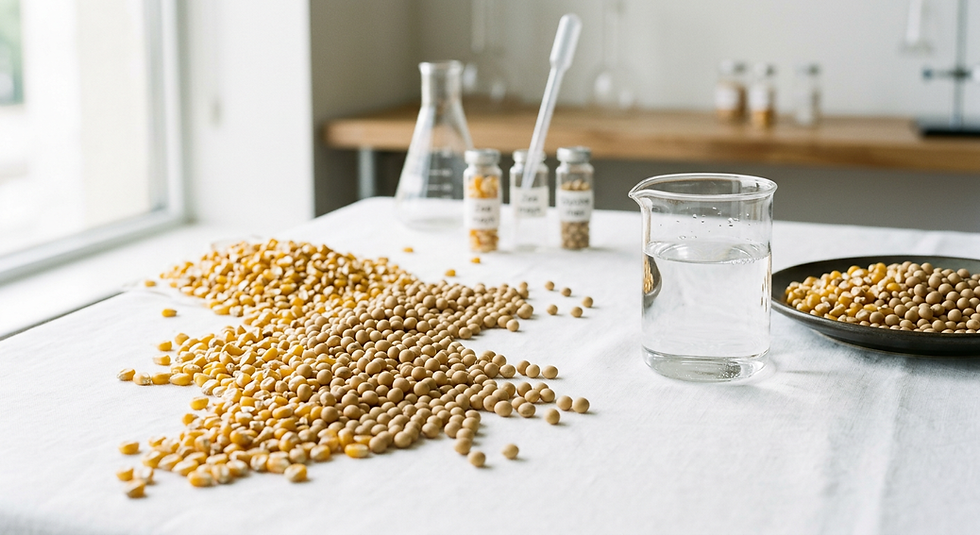
The list of crops that actually qualify is also much shorter than the cultural conversation implies. As of the current USDA list, it includes select varieties of corn, soybeans, canola, cotton, potatoes, summer squash, apples, papaya, pink pineapple, alfalfa, sugar beets, and a small amount of farmed salmon. That's it. Your tomatoes, wheat, strawberries, and nearly everything in the produce section is not bioengineered under this standard, no matter what an Instagram infographic told you.
Worth noting too: newer gene-editing tools like CRISPR are explicitly excluded from this labeling standard, because they don't rely on the older recombinant DNA techniques the law was written around. That's a meaningful gap in transparency, and a fair point for critics to raise: the label tells you less than it implies.
The Fear: Where It Came From, and What the Evidence Actually Shows
The health fears around GMOs tend to cluster around a few claims: that they cause cancer, that they trigger new allergies, that they're linked to infertility or chronic disease, that something about "inserting foreign genes" is inherently dangerous to eat.
In 2016, the National Academies of Sciences, Engineering, and Medicine set out to answer this as rigorously as it's possible to answer a question like this. A panel of twenty scientists reviewed more than 900 studies, took input from 80 outside experts, and compared long-term health data between North America, where genetically engineered crops have been a dietary staple for two decades, and Europe, where they largely aren't. Their conclusion: no substantiated evidence that food from genetically engineered crops carries elevated risk of cancer, allergies, or other chronic disease compared to conventionally bred food. Long-term livestock health data, gathered before and after GE feed was introduced, showed no adverse effects either.
That finding isn't an outlier. It's the same conclusion reached, independently, by the World Health Organization, the American Medical Association, the European Commission, and roughly every major national academy of science that has examined the question. Among scientists themselves, the consensus is about as strong as it gets in biology: a 2015 Pew survey found 88 percent of AAAS scientists consider GM food safe to eat. Among the general public, that number was 37 percent. That fifty-point gap is one of the largest disagreements between scientists and the public on any scientific question tracked in that survey, bigger than the gap on climate change or vaccine safety.
So why the gap? Partly it's unfamiliarity with the mechanism: "inserting a gene" sounds unnatural in a way that, say, decades of selective breeding doesn't, even though selective breeding has produced far larger genetic changes over time; it's just slower and less visible. Partly it's a few high-profile studies, since retracted or discredited for serious methodological flaws, that got wide media coverage before the scientific community could weigh in. And partly, honestly, it's distrust of the companies behind the technology, which is a separate and more defensible concern than a fear of the biology itself. We'll come back to that distinction, because it matters.
Now, the Contrarian Part: The Fear Isn't All Wrong
Here's where a fair-minded piece on this topic has to resist the temptation to just declare "science says it's fine, case closed." Because that framing, while true about direct health effects, quietly skips past the parts of this story that are genuinely worth worrying about. The scientific consensus on human safety is strong. The picture on agricultural and environmental practice is a lot messier, and a good deal of that mess is real.
Take herbicide-resistant crops, the single largest category of GM technology in the US, covering the vast majority of corn, soybean, and cotton acreage. The pitch was straightforward: engineer the crop to survive glyphosate (Roundup), spray the whole field, kill the weeds, leave the crop standing. For a few years, it worked beautifully. Then evolution did what evolution does. Weeds under constant selective pressure from a single herbicide started developing resistance to it. A peer-reviewed analysis of USDA data found that the emergence of glyphosate-resistant "superweeds" was strongly correlated with a measurable increase, not decrease, in overall herbicide use on GM crops; more than 240 populations across at least 34 weed species have now developed glyphosate resistance in the US alone, some infesting tens of millions of acres. The industry's response has largely been to stack in resistance to additional, older herbicides like 2,4-D, layering chemical solutions on top of a chemical problem rather than solving it.
There's also a genuine, unresolved scientific disagreement about glyphosate itself, separate from the GMO safety question. In 2015, the International Agency for Research on Cancer classified glyphosate as "probably carcinogenic to humans," based largely on published, peer-reviewed genotoxicity studies. The EPA and several other regulatory bodies, drawing more heavily on industry-submitted unpublished studies, concluded it's "not likely" carcinogenic at typical dietary exposure. A federal appeals court later found real flaws in the EPA's reasoning and sent the agency back to redo parts of its assessment.
This is not settled. Reasonable scientists disagree, and the honest answer is that occupational exposure at high doses looks more concerning than the trace dietary exposure most consumers experience, and the distinction between those two things gets flattened constantly in public conversation.
None of this means the food on your plate is dangerous to eat. It means the agricultural system built around some GM traits has real, documented downstream costs: more herbicide use over time in some cases, contested chemical safety questions that are still being litigated, and a farming model that concentrates enormous market power in a small number of seed and chemical companies. That last point, corporate consolidation and the loss of farmer autonomy over seed saving, is arguably the most legitimate critique in the entire debate, and it gets the least airtime because it's harder to put on a scary label than "cancer."
The Benefits That Rarely Make the Headlines
If the risks get overstated in one direction, the benefits get undersold in the other, particularly the ones that have nothing to do with a suburban grocery store.
Insect-resistant Bt crops, engineered to produce a naturally occurring protein toxic to specific pests but harmless to humans, have measurably reduced insecticide applications in the fields where they're used; a large meta-analysis of adoption data found GM technology reduced chemical pesticide use by an average of 37 percent while increasing yields by 22 percent and farmer profits by 68 percent, with the biggest gains among small-scale farmers in developing countries. That's fewer broad-spectrum insecticides sprayed on fields, which matters for farmworker exposure and surrounding ecosystems, even as the herbicide-resistance problem above complicates the overall picture.
Then there's Golden Rice, probably the single clearest humanitarian case for the technology. Engineered to produce beta-carotene, which the body converts to vitamin A, it was designed to address a deficiency that the World Health Organization estimates contributes to hundreds of thousands of child deaths and cases of preventable blindness annually in vitamin-A-scarce regions.
Modeling based on Indian public health data suggests widespread adoption of Golden Rice could prevent tens of thousands of child deaths a year. It has been stuck in regulatory and activist opposition for over two decades, opposition frequently rooted in the same "unnatural" framing this article opened with, and largely disconnected from any evidence of harm from the rice itself, which independent allergenicity testing found clean.
This is the tension worth sitting with: the same technology that enables herbicide-resistant monocropping with real ecological downsides also enables a rice variety that could prevent child blindness. "GMO" isn't one thing with one verdict. It's a tool, and like most tools, the question that actually matters isn't "is it good or bad," it's "what specifically was built with it, and why."
What This Means for How You Actually Eat
You're not going to solve global agricultural policy by reading ingredient labels more carefully at the store, and that's not really the point of this section. The point is that "bioengineered" doesn't need to trigger fear, but it also doesn't need to trigger indifference. Both reactions skip the actual thinking.
A few grounded takeaways: eating corn, soy, or canola-derived ingredients from bioengineered crops carries no substantiated direct health risk based on the best available evidence, so if avoiding them is costing you money, convenience, or variety for that reason alone, that tradeoff isn't backed by the data.
If your concern is more about herbicide use, corporate consolidation of the food supply, or supporting smaller-scale agriculture, that's a legitimate values-based choice, and buying organic or from local growers is a more precise way to act on it than avoiding "GMOs" as a blanket category. And if you're the type of person who reads a label and wants to actually understand it rather than just react to it, now you do: it means detectable modified genetic material from a specific, short list of crops, using a specific older technique, nothing more and nothing less.
The people most susceptible to bad information on this topic aren't unintelligent. They're reasonably skeptical people who were never given the actual data and filled the gap with the most emotionally resonant story available. That's not a personal failing. It's what happens when a genuinely complicated agricultural and regulatory question gets flattened into a yes-or-no label on a cereal box.
The Bigger Pattern
This is, in a strange way, a fitness and health story too, even though it's about crops and legislation rather than reps and recovery. The same instinct that makes someone fear a bioengineered soybean because the word "genetic" sounds scary is the same instinct that makes someone fear strength training because "heavy" sounds dangerous, or fear a whole food group because a headline used the word "processed." Fear that isn't anchored to evidence doesn't actually protect you. It just narrows your options while leaving you no safer, and often distracts from the choices that would genuinely move the needle, like where your food actually comes from, how it's grown, and who controls that system.
The goal was never to be uncritical about your food supply. It's to be critical about the right things, for the right reasons, instead of borrowing someone else's fear because the science felt too complicated to check for yourself.
That's the whole approach we try to bring to health decisions generally at Evolve: not blind trust in an industry, and not blind fear of one either, just a genuine look at what the evidence supports before deciding what's actually worth worrying about.



Comments